
November 19, 2025

Is Your Installer OR-Certified? A Quick Verification Guide

Author

Adam Walters

Update First Last in Content -> Business Text -> First Last field

Date

November 19, 2025

Share

Is Your Installer Oregon-Certified? A Quick Verification Guide

The decision to go solar is an exciting one. It’s a powerful step towards energy independence, lower utility bills, and a more sustainable future for your family. As you begin your research in Oregon, you’re likely flooded with ads, offers, and promises. But amidst all the talk of panel efficiency and battery storage, there’s one factor that outweighs all others in determining the success of your project: the quality of your installer.

A great solar installation can provide clean energy for 25+ years. A poor one can lead to roof leaks, underperforming systems, voided warranties, and even serious safety hazards. The difference almost always comes down to one thing: qualifications.

This guide is designed to empower you, the Oregon homeowner. We’ll cut through the marketing jargon and give you the exact tools and knowledge you need to verify that the company you’re considering is licensed, certified, and truly qualified to work on your home. Think of this as your pre-flight checklist before launching your solar journey.

Beyond the Sales Pitch: Why Vetting Your Installer is Non-Negotiable

Choosing a solar installer is not like picking a new appliance. You are hiring a specialized construction and electrical contractor to make significant modifications to your home’s most critical systems. The stakes are high, and proper vetting is your single best defense against future problems.

Here’s why it’s so crucial:

  • Safety and Code Compliance: A solar energy system is a power plant on your roof. It involves high-voltage direct current (DC) electricity, which requires meticulous handling and expertise. A licensed and certified installer understands the National Electrical Code (NEC) , local building codes, and utility interconnection requirements. This ensures your system is safe from fire hazards and will pass all required inspections.
  • System Performance and ROI: The angle of your panels, the quality of the wiring, and the proper configuration of your inverters all have a massive impact on how much energy your system produces. An expert installer designs a system optimized for your specific roof and energy goals, ensuring you get the fastest possible return on your investment. An amateur installation can leave you with a system that consistently underperforms, costing you thousands in lost savings over its lifetime.
  • Warranty Protection: Top-tier equipment manufacturers like REC, Enphase, and Generac offer robust, long-term warranties. However, these warranties often contain clauses that require the equipment to be installed by a qualified, and sometimes factory-certified, professional. Using an uncertified installer can void your warranties, leaving you on the hook for expensive repairs or replacements.
  • Longevity and Durability: Your solar installation needs to withstand decades of Pacific Northwest weather—from driving rain and winter storms to summer heat. A professional installer uses proper mounting and flashing techniques to protect the integrity of your roof and ensure the entire system remains secure and watertight for the long haul.

Ultimately, taking the time to verify your installer’s credentials is the best investment you can make in your solar project. It provides the peace of mind that your system will be safe, productive, and reliable for decades to come.

Person points at laptop screen showing solar panel layout, with another person looking on.

The Oregon Licensing Framework: A Homeowner’s Guide

Oregon has a robust system for licensing contractors, managed primarily by the Oregon Construction Contractors Board (CCB) . For a solar company to operate legally, they need specific licenses and endorsements. Understanding these is the first step in how to check a solar company in Oregon .

Any legitimate solar installer in Oregon must hold, at a minimum, an active CCB license. This ensures they are registered with the state, bonded, and carry liability insurance, which protects you from financial loss.

However, solar is unique. The company must also have the proper electrical licensing, which is overseen by the Oregon Building Codes Division (BCD). This means the company must employ appropriately licensed electricians, such as a Supervising Electrician, to oversee the electrical portion of the work, ensuring it is done safely and to code.

Your Step-by-Step Guide to Using the CCB Lookup Tool

Oregon’s CCB makes it easy for consumers to check a contractor’s status. Don’t just take a salesperson’s word for it—verify it yourself in under two minutes.

Here’s how to verify a solar installer license in Oregon City , or anywhere else in the state:

1) Navigate to the CCB “Search for a Contractor” Tool: You can find this by searching online for “ Oregon CCB Search ” or by going directly to the CCB website.

2) Search by Business Name or License Number: Enter the full legal name of the solar company or their CCB license number if you have it.

3) Review the License Details: On the results page, confirm they have an active license. Look for these key details:

  • License Status: It must say “Active.” If it says “Inactive,” “Suspended,” or “Expired,” that is a major red flag.
  • Bond and Insurance: Check that their bond and liability insurance are both listed as “Active.”
  • Dispute History: The CCB site will also show any resolved or unresolved claims filed against the contractor. A pattern of disputes is a clear warning sign.

This simple verification process is the most effective way to filter out unqualified or illegitimate operators. Any of the licensed solar contractors in Clackamas County and beyond will be present and in good standing in this database.

Beyond the License: Certifications That Signal True Expertise

While state licensing is the mandatory minimum, the best installers go further to prove their expertise. Voluntary, third-party certifications show a company’s commitment to ongoing education and the highest industry standards.

The Gold Standard: NABCEP Certification

If you see one certification, this is the one you want. The North American Board of Certified Energy Practitioners (NABCEP) is the most respected certification organization in the renewable energy industry.

  • What it means: A NABCEP-certified professional has passed a rigorous exam based on advanced knowledge and has documented experience leading solar installations. It’s the equivalent of a board certification for a doctor.
  • Why it matters: It tells you that the individuals designing and installing your system are true experts who are dedicated to their craft. When you are looking for NABCEP certified installers in Portland , you are looking for the best of the best. Companies that invest in NABCEP certification for their team are investing in quality.

Manufacturer Certifications

Top-tier solar equipment manufacturers want their products to perform flawlessly. To ensure this, they often create certification programs for installers. For example, a company might be an “Enphase Platinum Installer” or an “REC Certified Solar Professional.”

  • What it means: The installation team has received specific factory training on how to properly install, configure, and service that brand’s equipment.
  • Why it matters: This is crucial for two reasons. First, it ensures you get the best performance out of your specific equipment. Second, it often unlocks extended warranty benefits that wouldn’t be available otherwise.

When you’re choosing a solar installer in Oregon , ask them which brands they are certified to install. This speaks to their expertise and shows they have strong relationships with the manufacturers of the products they recommend.

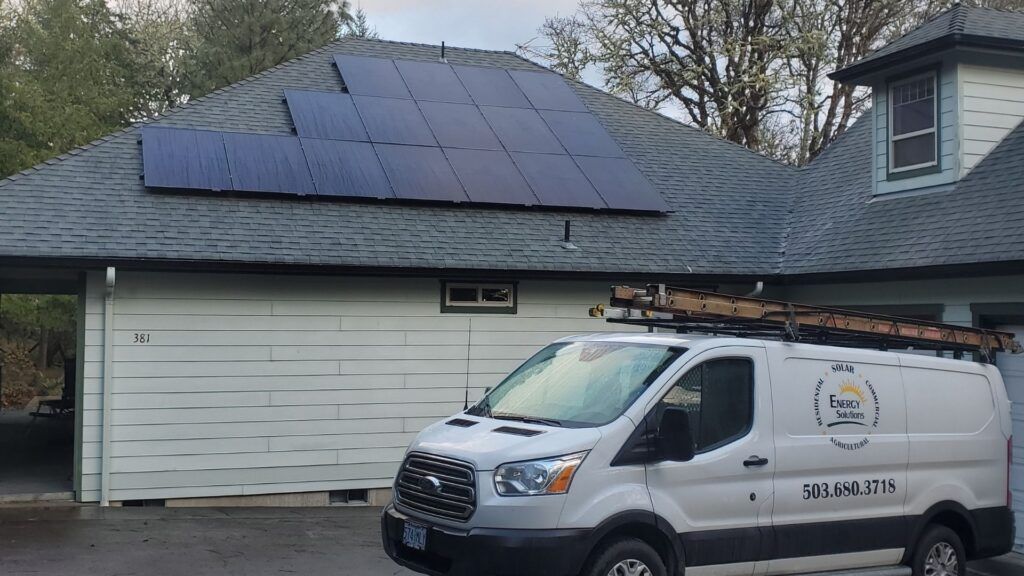
home solar panels on garage with energy solution van in front

Building Your Shortlist: Finding Reputable Companies in Your Area

Now that you know what to look for, how do you find the right companies to vet? The search for Oregon-approved solar installers starts locally.

  • Check Online Reviews: Start with Google, Yelp, and other third-party review sites. Look for patterns in the feedback. Are customers consistently praising the company’s communication, professionalism, and post-installation support?
  • Ask for Local References: Any established, reputable company should be proud of their work and happy to provide you with a list of recent customers in your area.
  • Look for a Physical Presence: A solar company with a local office and warehouse, like our headquarters in Oregon City, is a sign of stability and commitment to the community.
  • Get Multiple, Detailed Quotes: We recommend getting at least three quotes from different qualified installers. A proper quote should be a detailed, multi-page proposal, not a one-page estimate.

This process will help you narrow down the field to a shortlist of the truly best solar installers in the Portland metro area .

Red Flags: Warning Signs of a Questionable Installer

As you speak with different companies, keep an eye out for these common red flags:

  • High-Pressure Sales Tactics: Be wary of any salesperson who pressures you to sign a contract on the spot with “limited-time offers.”
  • Vague or Incomplete Contracts: Your contract should detail every aspect of the project. If it’s vague on equipment models, timelines, or total costs, do not sign it.
  • Hesitation to Provide License Numbers: If a contractor can’t or won’t immediately provide you with their CCB license number, end the conversation.
  • Unrealistic Promises: Be skeptical of promises of “free solar” or guaranteed elimination of your utility bill. A reputable installer will provide realistic, data-backed savings estimates.

Your Verification Checklist: A Summary for Success

Navigating the process can feel overwhelming, so use this checklist to stay on track when evaluating potential installers.

  • Verify CCB License: Check the Oregon CCB website for an “Active” license and clean dispute history.
  • Ask About Electrical License: Confirm the company employs properly licensed electricians for the installation.
  • Ask About NABCEP: Inquire if their lead installers or designers hold NABCEP certification.
  • Check Manufacturer Certifications: Ask which equipment brands they are factory-certified to install.
  • Read Online Reviews: Scour Google and other platforms for recent customer feedback.
  • Request Local References: Ask for a list of past customers in your area.
  • Get Detailed, Written Quotes: Obtain at least three comprehensive proposals to compare.
  • Review the Contract Thoroughly: Read every line before you sign.

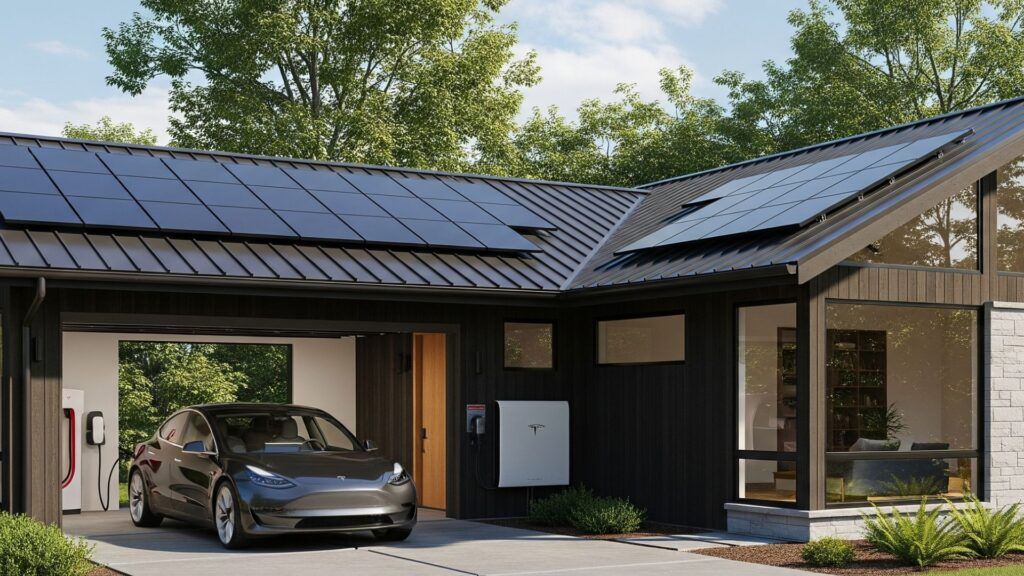
Black solar panels on a house roof with a garage and electric car charging.

Your Foundation for a Successful Solar Future

Going solar is a significant investment in your home and your energy future. The installer you choose is the single most important factor in ensuring that investment pays off. By using the tools and knowledge in this guide, you can move forward with confidence, knowing you have done the due diligence required to select a truly qualified, professional, and trustworthy partner.

With over 1050 successful local projects , our reputation in Oregon is built on a foundation of quality and trust. The verification process isn’t just an extra step; it’s the foundation upon which a safe, high-performing, and long-lasting solar energy system is built. Take your time, do your research, and you’ll be well on your way to enjoying the benefits of clean, renewable energy for decades to come.

By Adam Walters December 30, 2025
Stop paying at the pump and the plug. Learn how to fuel your electric vehicle with solar energy, how many panels you need, and why it’s the ultimate "Oregon" upgrade.
By Adam Walters December 22, 2025
Living in the PNW means battling moss, pollen, and pine needles. Learn the right way to clean your solar panels (and what to avoid) to keep your energy production high.
By Adam Walters December 19, 2025
Confused by building codes and electrical permits? We break down the solar permitting process in the Portland Metro area, from engineering review to the final PGE inspection.
By Adam Walters December 16, 2025
Deciding how to pay for solar? We compare solar loans vs. cash, breaking down the benefits of each option from ROI to zero-down financing for Oregon homeowners.
By Adam Walters December 10, 2025
Analyze the financial returns of commercial solar in the Portland Metro area. Learn about the 2025 incentives, 5-year MACRS depreciation, and typical ROI for Oregon businesses.
By Adam Walters December 5, 2025
Thinking of installing solar panels yourself? We break down the true costs, safety risks, permit hurdles, and warranty issues associated with DIY solar in the Oregon City area.

Solar panels on a dark roof under a blue sky.
By Adam Walters November 23, 2025
Discover the #1 reason to hire a NABCEP certified solar installer. Learn how this gold-standard certification ensures quality, safety, and a faster ROI for your home.
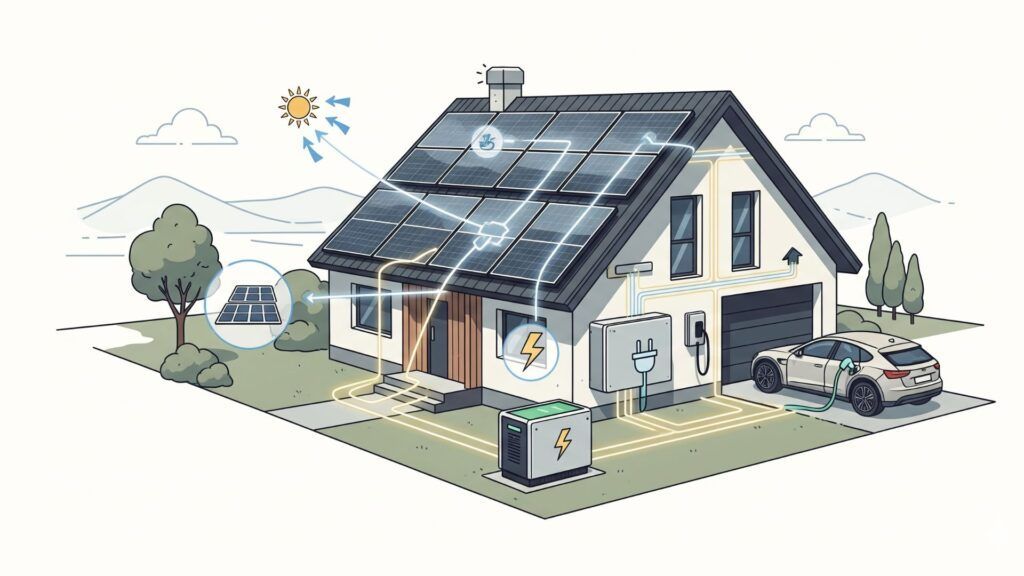
House with solar panels, electric car, battery storage, and an illustration showing the flow of solar energy.
By Adam Walters October 14, 2025
How Solar NEM Works in Oregon Going solar in Oregon is one of the most powerful financial and environmental decisions a homeowner can make. Beyond the immediate benefit of producing your own clean energy, a state-level policy called net metering in Oregon fundamentally transforms your relationship with the electric grid, turning your home into a mini power station that can actually earn you credit. While it sounds technical, the concept[…]
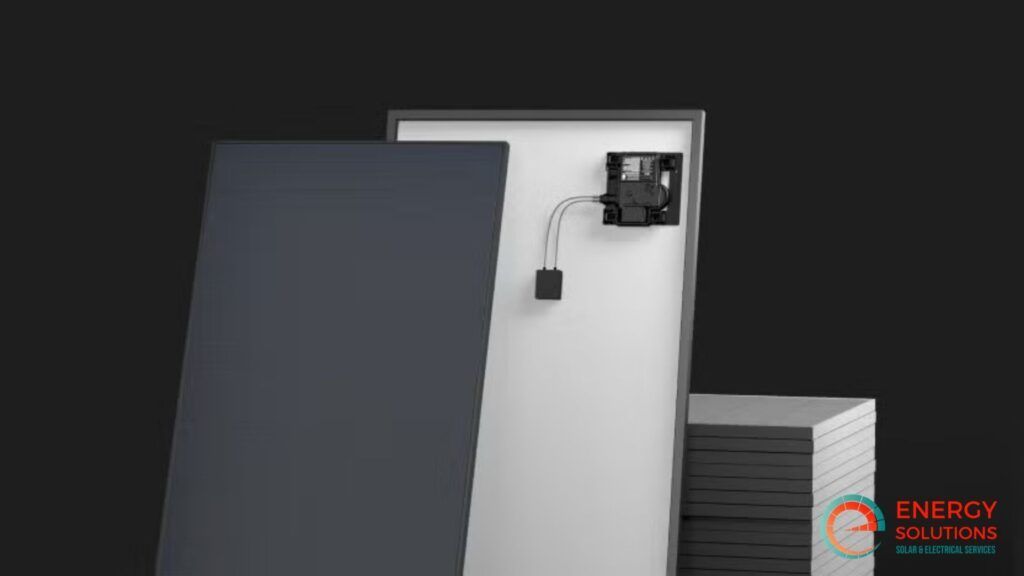
Solar panel: black front, white back with junction box and wires, stacked panels on gray background.
By Adam Walters October 7, 2025
Choosing a solar inverter? Compare microinverters vs. string inverters on cost, performance, and shade tolerance. Find the best option for your home solar system.