December 5, 2025

DIY vs. Professional Solar Installation in Oregon: Is the Risk Worth the Savings?

Author

Adam Walters

Update First Last in Content -> Business Text -> First Last field

Date

December 5, 2025

Share

Key Highlights

  • The Core Question: While DIY saves on labor (around 10-15% of the total project cost), it introduces significant risks related to safety, permitting, and long-term performance.
  • The Insurance Gap: Most homeowners’ insurance policies and panel manufacturer warranties do not cover systems installed by an unlicensed homeowner.
  • The Code Barrier: Oregon’s strict building and electrical codes —especially the required PGE Interconnection Agreement —make 100% legal DIY impossible for the average person.
  • Hidden Costs of DIY: Expect to pay retail prices for equipment, spend weeks on the permitting process, and potentially fail mandatory inspections.
  • The “Peace of Mind” Price: Hiring a NABCEP Certified local team guarantees a system that is safe, efficient, and guaranteed to produce power for 25+ years.

DIY vs. Pro Solar Installation: A Cost & Safety Breakdown

The internet is filled with articles promising massive savings if you install solar panels yourself. The pitch is compelling: Why pay thousands of dollars in labor when you can climb up on your roof, read a few manuals, and pocket the difference?

At Energy Solutions , we understand the desire for efficiency and saving money—that’s why you’re looking at solar in the first place! We are always transparent about where your money goes. The installation labor is a significant part of any project.

However, based on our years of experience serving homeowners across Oregon City and the Portland Metro area, we must offer a word of caution. Going the DIY route often results in a system that is either illegal, unsafe, or simply won’t perform efficiently in the long run.

The truth is, solar installation is a highly specialized trade that requires electrical, roofing, and structural engineering expertise—and in Oregon, it’s bound by complex legal requirements.

Let’s honestly compare the initial promise of DIY savings against the guaranteed, long-term value of a professional installation.

The Alluring Promise of DIY (The Initial Savings)

The primary reason a homeowner considers DIY is simple: saving the installation labor cost.

On average, installation labor accounts for about 10% to 15% of the total cost of a residential solar project. If you have a $25,000 system, that’s $2,500 to $3,750 you could potentially save.

DIY enthusiasts correctly point out that:

  • The Components are Modular: Panels and racking systems (like IronRidge ) are designed to interlock.
  • Guides Exist: Component manufacturers provide detailed installation instructions.

This is where the easy part ends. The remaining 85% to 90% of the project involves specialized knowledge and legal access that the average homeowner simply doesn’t possess.

The Reality of Professional Installation (The Guaranteed Outcome)

When you hire a NABCEP Certified local expert like Energy Solutions , you are not just paying for labor; you are purchasing expertise, insurance, and legal compliance.

A. Specialized Skills on Deck

A professional solar team is actually three professionals in one:

  1. The Roofer/Structural Expert: Ensures the racking is correctly attached to your rafters, that your roof integrity is preserved, and that the attachment points can handle Oregon’s snow and wind loads.
  2. The Master Electrician: Safely connects the system, handles the 240-volt wiring, installs the critical safety shut-off switches (required by code), and ensures the inverter is sized correctly for your electrical panel.
  3. The Project Manager/Permitting Expert: Navigates the bureaucratic hurdles.

B. Project Management and Paperwork

This is the hidden administrative burden that stops most DIY projects dead in their tracks. We handle:

  • Engineering Drawings: Submitting stamped, certified blueprints to the City of Portland or Clackamas County that prove the system is safe.
  • Interconnection Agreement: Negotiating and filing the crucial documents with PGE that legally allow your system to spin their meter backward (Net Metering). This step cannot be skipped.
  • Inspections: Scheduling and passing the mandatory Structural and Electrical inspections required by the local building authority.

The Detailed Cost Breakdown (The Savings Myth)

When calculating DIY “savings,” homeowners often overlook several critical factors that narrow the gap:

Factor DIY Cost Reality Professional Advantage
Equipment Price You pay retail price. We pay wholesale price (up to 20% less).
Permitting Fees You pay fees + must spend 40+ hours managing permits, corrections, and scheduling. Fees are covered, we manage the entire timeline.
Specialty Tools You must buy or rent specialized torque wrenches, safety harnesses, grounding equipment, etc. Included in our labor cost.
Warranty Risk Your time has no warranty. If the system fails, you diagnose and fix it yourself. Full labor and equipment warranty for 25+ years.
Inspection Failure Requires paying re-inspection fees and costly repairs/rewiring. We guarantee compliance and pass inspections the first time.

In the end, by paying retail for parts and incurring unexpected fees and delays, the DIY project often ends up costing nearly as much, if not more, than the professional installation price—with none of the protection.

Safety & Legal Risks (The Oregon Code Imperative)

This is the most critical section. We cannot, as a responsible energy consultant, recommend a DIY installation due to the inherent dangers and legal impossibility of getting approval.

Risk 1: Electrical Danger

Solar panels produce dangerous amounts of DC electricity the moment they see light. Improper wiring can lead to:

  • Arc Faults: The primary cause of solar-related electrical fires , often occurring behind the wall or in the attic where loose connections go unnoticed.
  • Shock Hazard: Without the proper safety equipment and Rapid Shutdown protocols (which are mandated by Oregon electrical code), an untrained individual attempting to connect a live array is at extreme risk.

Risk 2: Structural Integrity

Your roof is designed to keep water out. A professional knows exactly where to drill, how to seal the flashing, and how to use the right sealants to guarantee a 25-year watertight seal. A single improperly drilled hole or poorly sealed lag bolt leads to leaks, water damage, and costly structural repairs years down the road.

Risk 3: Permitting and Interconnection

Oregon requires both a building permit (structural) and an electrical permit.

  • Electrical Permit: Almost universally requires a licensed electrical contractor to pull the permit. This means, even if you do all the physical work, you still have to hire an electrician to inspect, connect, and sign off on the system to achieve legal status.
  • Net Metering: PGE will not allow your system to legally connect to the grid and start earning credits until a licensed professional has signed off on the system and the utility has issued the final “Permission to Operate (PTO).” Without this, your system is technically operating illegally.

Warranties and Insurance (The Long-Term Risk)

Solar is a long-term investment. What happens if something goes wrong in Year 7?

  • Manufacturer Warranties: Major panel manufacturers ( Enphase , Generac , etc.) offer excellent 25-year performance warranties, but nearly all of them require proof of installation by a licensed, certified professional to be valid. A DIY error often voids the warranty entirely.
  • Homeowners Insurance: If a fire starts due to an improperly connected wire or a roof leak is attributed to a racking failure, your homeowners insurance policy may deny the claim if the installation was performed by an unlicensed person. This single risk outweighs any potential savings.

The Bottom Line: Choose Certainty, Not Risk

While we applaud the spirit of independence, the complexity, safety risks, and critical legal hurdles in the Portland Metro area make DIY solar a false economy. The small amount of money you save on installation labor is quickly swallowed by the costs of permits, equipment, failed inspections, and the immense risk to your home’s structure and electrical system.

Investing in solar is investing in your home’s future value and safety. Trust the certified, local experts who live and work here in Oregon City to deliver a system that is guaranteed to last.

Ready to start the right way? Get My Free Quote or call our local team at 503-680-3718 for a custom design assessment.

By Adam Walters December 30, 2025
Stop paying at the pump and the plug. Learn how to fuel your electric vehicle with solar energy, how many panels you need, and why it’s the ultimate "Oregon" upgrade.
By Adam Walters December 22, 2025
Living in the PNW means battling moss, pollen, and pine needles. Learn the right way to clean your solar panels (and what to avoid) to keep your energy production high.
By Adam Walters December 19, 2025
Confused by building codes and electrical permits? We break down the solar permitting process in the Portland Metro area, from engineering review to the final PGE inspection.
By Adam Walters December 16, 2025
Deciding how to pay for solar? We compare solar loans vs. cash, breaking down the benefits of each option from ROI to zero-down financing for Oregon homeowners.
By Adam Walters December 10, 2025
Analyze the financial returns of commercial solar in the Portland Metro area. Learn about the 2025 incentives, 5-year MACRS depreciation, and typical ROI for Oregon businesses.
Solar panels on a dark roof under a blue sky.
By Adam Walters November 23, 2025
Discover the #1 reason to hire a NABCEP certified solar installer. Learn how this gold-standard certification ensures quality, safety, and a faster ROI for your home.

Person points at solar panel layout on laptop, with another person looking on.
By Adam Walters November 19, 2025
Before hiring an Oregon solar installer, use our guide to verify their license with the CCB tool. Learn why NABCEP certification matters for your home's safety & ROI.
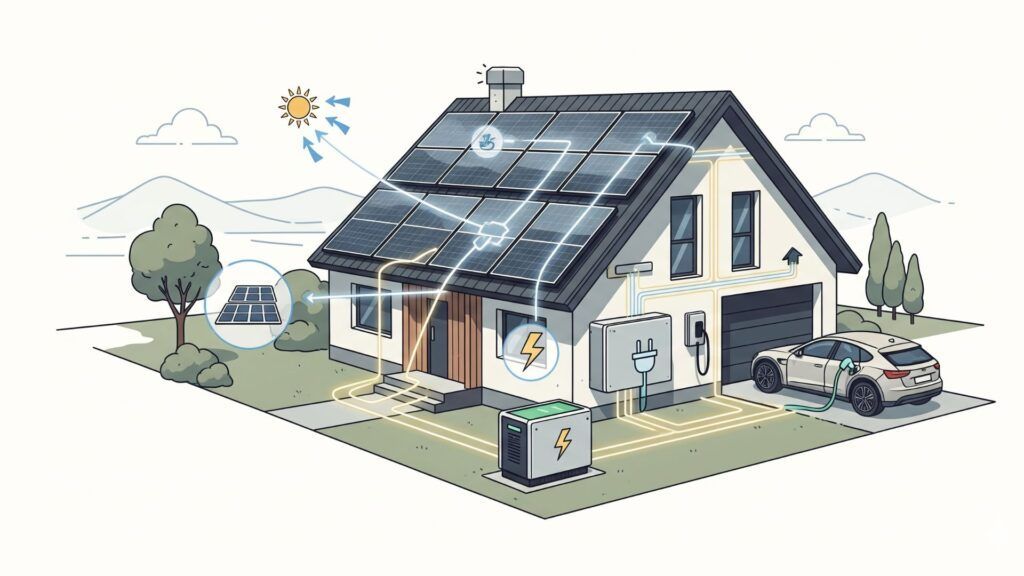
House with solar panels, electric car, battery storage, and an illustration showing the flow of solar energy.
By Adam Walters October 14, 2025
How Solar NEM Works in Oregon Going solar in Oregon is one of the most powerful financial and environmental decisions a homeowner can make. Beyond the immediate benefit of producing your own clean energy, a state-level policy called net metering in Oregon fundamentally transforms your relationship with the electric grid, turning your home into a mini power station that can actually earn you credit. While it sounds technical, the concept[…]
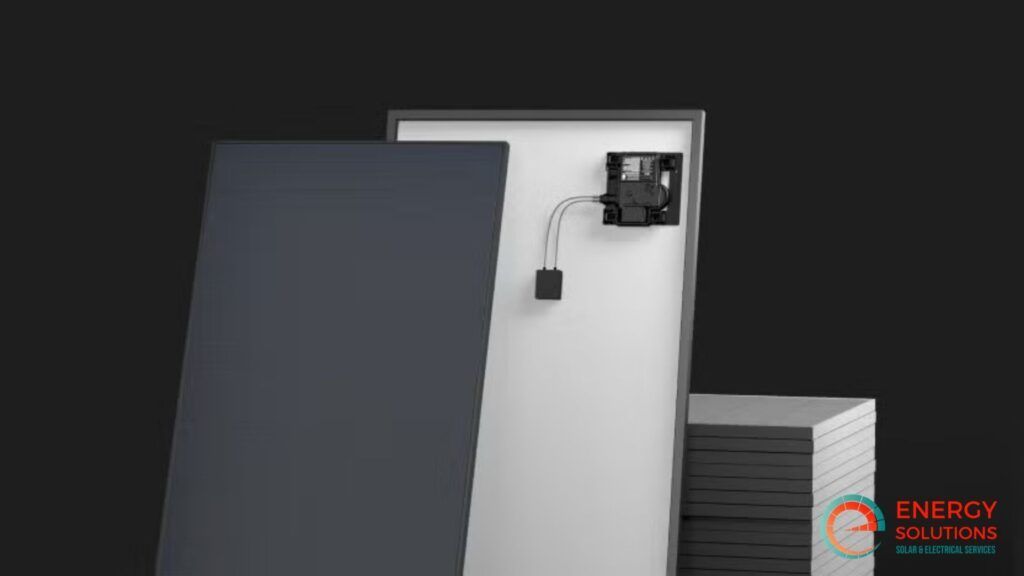
Solar panel: black front, white back with junction box and wires, stacked panels on gray background.
By Adam Walters October 7, 2025
Choosing a solar inverter? Compare microinverters vs. string inverters on cost, performance, and shade tolerance. Find the best option for your home solar system.