December 19, 2025

Solar Permitting in Portland & Oregon City: A Homeowner’s Guide to the Process

Author

Adam Walters

Update First Last in Content -> Business Text -> First Last field

Date

December 19, 2025

Share

Key Highlights

  • It’s Not Just One Permit: You typically need both a Structural Building Permit (for the roof) and an Electrical Permit (for the wiring).
  • Jurisdiction Matters: “Portland” is a broad term. Rules differ depending on if you are in the City of Portland , Oregon City , Lake Oswego , or unincorporated Clackamas County .
  • The Utility Handshake: Getting the permit is only half the battle; we also have to file an Interconnection Agreement with PGE for Net Metering.
  • HOA Rights: Good news—Oregon law protects your right to generate energy. HOAs cannot unreasonably ban solar panels.
  • We Do The Paperwork: The best part? Energy Solutions manages this entire process for you. You don’t need to stand in line at the permit office.

Navigating Portland’s Solar Permits: A Step-by-Step Guide

Excitement is high. You’ve signed the proposal, you’ve picked your panels, and you’re ready to start saving money.

Then… silence.

For a few weeks, it seems like nothing is happening. But behind the scenes, our office is buzzing. We are navigating the bureaucratic maze of the Portland Metro area to ensure your system is legal, safe, and code-compliant.

As Oregon City’s trusted solar experts, we believe transparency is key. While we handle all the heavy lifting, we want you to know exactly what is happening with your project. Here is the step-by-step journey of a solar permit.

Step 1: The Jurisdiction Hunt

The first thing we determine is: Who actually owns your roof?

If your mailing address says “Portland,” you might actually be in unincorporated Multnomah County. If you live in Clackamas , you might be under the jurisdiction of Oregon City , Happy Valley , or the county itself.

Each jurisdiction has different snow load requirements, wind ratings, and setback rules.

  • City of Portland (BDS): Has a streamlined “ Solar Prescriptive Path ” for simple roofs, but strict rules for historic districts.
  • Clackamas County: Often requires detailed structural engineering for older homes to prove they can hold the weight.

Step 2: Engineering & Design

Before we apply, we have to prove it works. Our engineers draw up a “line diagram” and a structural analysis.

We calculate:

  1. Dead Load: The weight of the panels themselves (approx. 3 lbs per sq. ft.).
  2. Live Load: The weight of a worker standing on them.
  3. Environmental Load: The weight of a potential February ice storm or a wind gust coming down the Columbia Gorge.

Step 3: Submission & Review

We submit the packet to the building department.

  • The Wait Time: In a perfect world, this takes 1-2 weeks. In reality, during the summer rush, some building departments can take 4-6 weeks to review plans.
  • The Corrections: Sometimes, a plan reviewer asks for a change. “Add a sticker here” or “Clarify the rafter spacing there.” We handle these revisions immediately.

Step 4: The Utility Interconnection (PGE)

While the city looks at the structure , we also have to talk to PGE (Portland General Electric) about the electricity.

We file a Net Metering Application . This tells PGE that you are about to become a power plant. They check to make sure the transformer on your street can handle the extra energy you’ll be sending back. It is rare, but sometimes they require upgrades to their equipment before we can connect.

Step 5: Installation & Inspection

Once we have the “Green Light” (the physical permit card), we install your system. But we aren’t done yet.

We have to schedule two main inspections:

  1. The Structural Inspection: The city inspector checks the racking to ensure lag bolts are hitting the rafters and the roof is watertight.
  2. The Electrical Inspection: They check the grounding, the wire sizing, and the safety labels.

Step 6: Permission to Operate (PTO)

This is the final hurdle. Once the city signs off, we send that proof to PGE.

PGE then installs a Bi-Directional Meter (one that can spin backward) and issues a letter called “Permission to Operate.”

Only then can you flip the switch. Turning the system on before PTO can result in fines or billing errors, so we always advise patience for this final step.

The Bottom Line

If this sounds like a lot of paperwork, it is. But the good news? You don’t have to do any of it.

At Energy Solutions , our project coordinators live and breathe these codes. We know the inspectors by name, and we know exactly what the City of Portland or Clackamas County wants to see.

Your job is to dream about your savings. Our job is to handle the red tape.

Ready to start the process? Get My Free Quote or call our local team at 503-680-3718 .

Frequently Asked Questions

Can my HOA stop me from getting a permit?

Generally, no. In Oregon, ORS 105.880 protects a homeowner’s right to install solar. An HOA can impose “reasonable” aesthetic rules (like asking for black-frame panels), but they cannot prevent you from installing a system or require you to put it in a shady spot that ruins performance.

How much do permits cost?

It varies by city and system size, but typically between $300 and $600. The good news is that we include all permitting fees in your initial proposal price—no surprise bills later.

Do I need to be home for the inspections?

Usually, yes. The inspector often needs access to the main electrical panel (which is often in the garage) and the attic. We will coordinate with you to find a time window that works

By Adam Walters December 30, 2025
Stop paying at the pump and the plug. Learn how to fuel your electric vehicle with solar energy, how many panels you need, and why it’s the ultimate "Oregon" upgrade.
By Adam Walters December 22, 2025
Living in the PNW means battling moss, pollen, and pine needles. Learn the right way to clean your solar panels (and what to avoid) to keep your energy production high.
By Adam Walters December 16, 2025
Deciding how to pay for solar? We compare solar loans vs. cash, breaking down the benefits of each option from ROI to zero-down financing for Oregon homeowners.
By Adam Walters December 10, 2025
Analyze the financial returns of commercial solar in the Portland Metro area. Learn about the 2025 incentives, 5-year MACRS depreciation, and typical ROI for Oregon businesses.
By Adam Walters December 5, 2025
Thinking of installing solar panels yourself? We break down the true costs, safety risks, permit hurdles, and warranty issues associated with DIY solar in the Oregon City area.
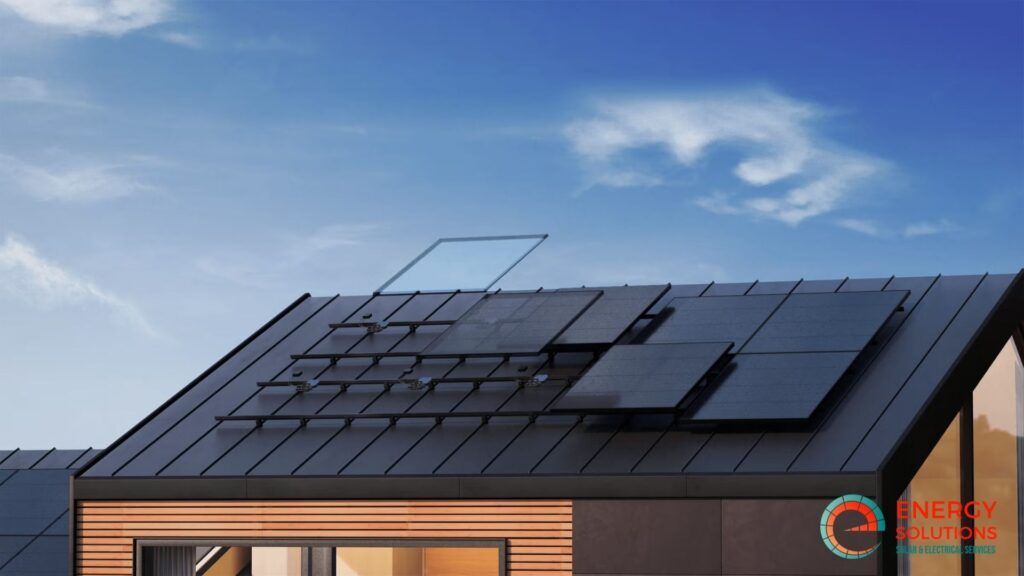
Solar panels on a dark roof under a blue sky.
By Adam Walters November 23, 2025
Discover the #1 reason to hire a NABCEP certified solar installer. Learn how this gold-standard certification ensures quality, safety, and a faster ROI for your home.

Person points at solar panel layout on laptop, with another person looking on.
By Adam Walters November 19, 2025
Before hiring an Oregon solar installer, use our guide to verify their license with the CCB tool. Learn why NABCEP certification matters for your home's safety & ROI.
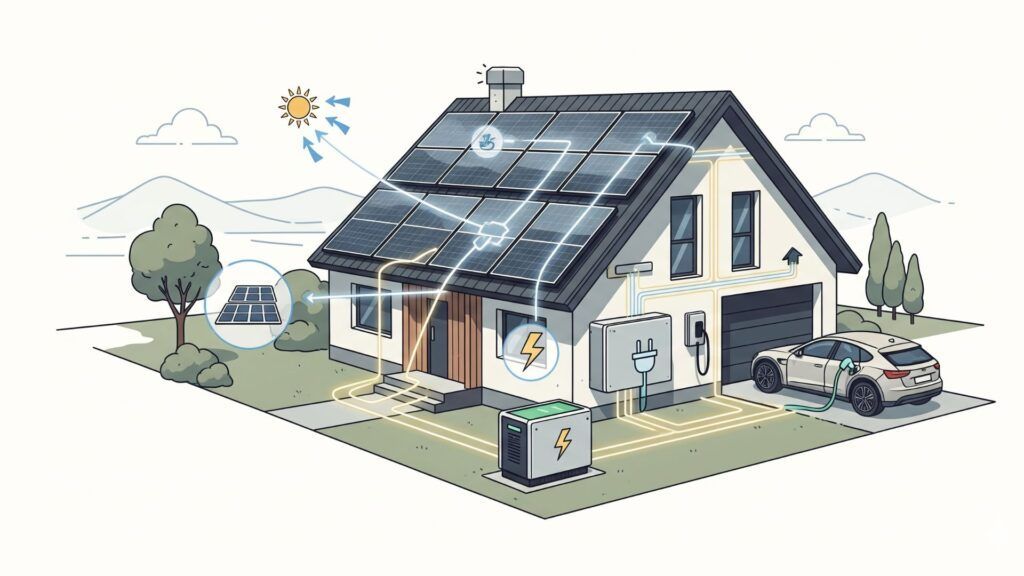
House with solar panels, electric car, battery storage, and an illustration showing the flow of solar energy.
By Adam Walters October 14, 2025
How Solar NEM Works in Oregon Going solar in Oregon is one of the most powerful financial and environmental decisions a homeowner can make. Beyond the immediate benefit of producing your own clean energy, a state-level policy called net metering in Oregon fundamentally transforms your relationship with the electric grid, turning your home into a mini power station that can actually earn you credit. While it sounds technical, the concept[…]
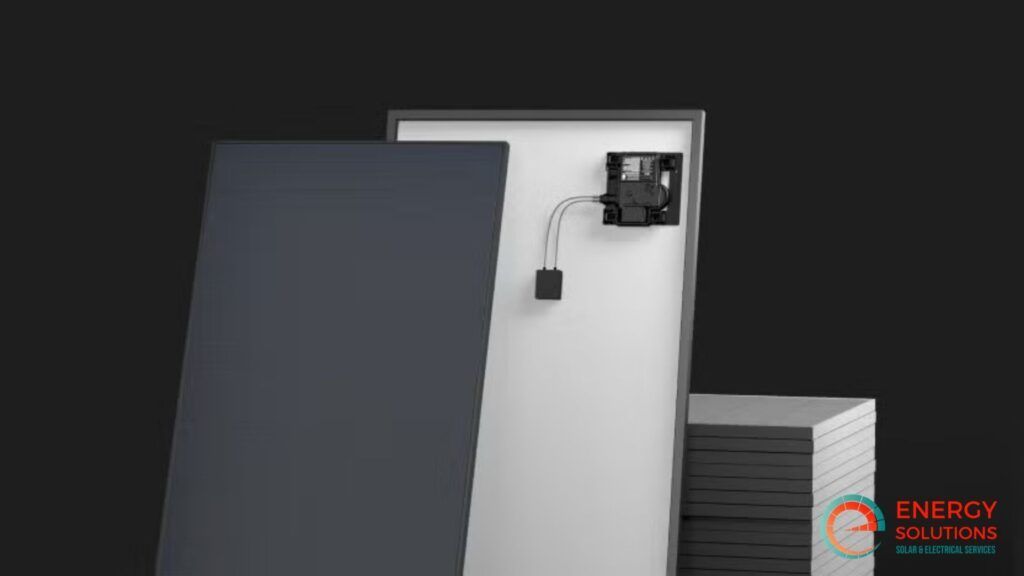
Solar panel: black front, white back with junction box and wires, stacked panels on gray background.
By Adam Walters October 7, 2025
Choosing a solar inverter? Compare microinverters vs. string inverters on cost, performance, and shade tolerance. Find the best option for your home solar system.